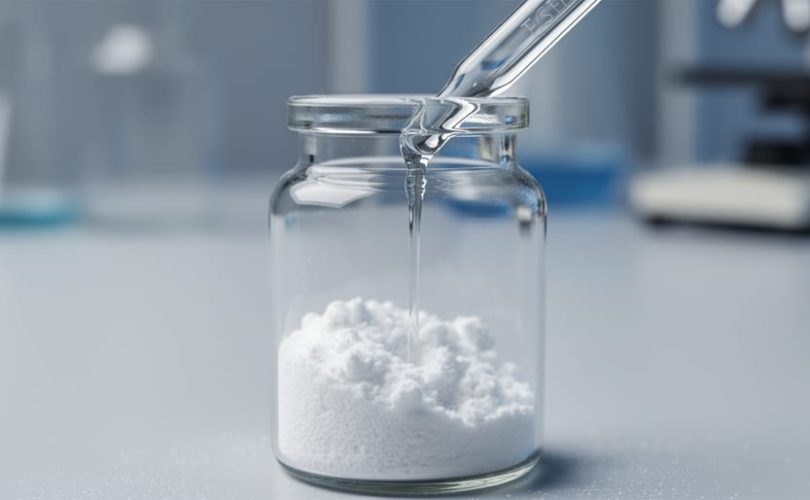
Lyophilized Kylo BPC-157 stays stable in a freezer or refrigerator, stays sealed and dry until you’re ready to use it, and is reconstituted with bacteriostatic water added slowly down the vial wall, then gently swirled, never shaken. That’s the whole method. The care you put into each step decides whether your material is still intact when the experiment begins.
BPC-157 is an investigational research peptide, not an herb and not an approved therapy, so this guide is written for laboratory work only. You’ll find no dosing advice or health claims here. What we can offer is the same respect for material quality that a good herbalist brings to the shelf. A dried root loses potency when it’s stored damp or in sunlight, and a peptide loses integrity when it’s warmed, shaken, or contaminated. Whether you’re sourcing a research-grade product or working from another supplier’s stock, the handling rules are the same. Plant traditions teach this lesson well. Choosing and gathering material with care, much like the principles behind ethical foraging, starts the quality chain long before anything reaches the bench.
Below, you’ll learn how to store the powder, choose a diluent, mix it cleanly, and keep the solution viable.
What BPC-157 Is (and Why Careful Handling Matters)
Understanding Lyophilized Peptides
Lyophilization, or freeze-drying, removes water from a peptide solution by freezing it and then gently drawing off the ice under vacuum. What’s left is a light, fluffy white cake or powder at the bottom of a sealed vial. That’s how most research peptides, BPC-157 included, arrive at the bench.
The reason is stability. Water drives the chemical reactions that break peptides down, so taking it out slows those reactions to a crawl. A dry powder also tolerates shipping far better than a liquid does.
If you’ve worked with dried herbs, the idea will feel familiar, but the comparison only goes so far. Dried chamomile is air-dried and still holds a little moisture. A lyophilized peptide is dried far more completely and sealed under controlled conditions. Once it’s dissolved, that protection is gone, and the solution degrades much faster than the powder ever would.
That gap between powder and solution is why the storage choices in the next sections matter so much.
What Degrades a Peptide
Peptides have a handful of reliable enemies, and knowing them makes every later step in this article easier to understand.
Heat speeds up the chemical reactions that break a peptide chain apart, so warm storage shortens a sample’s useful life. Moisture is just as troublesome. Water can slowly split the bonds holding the chain together (a process called hydrolysis), which is why dry powder outlasts any solution. Light, especially strong or direct light, can also damage sensitive molecules over time.
Repeated freeze-thaw cycles stress a dissolved peptide each time it changes state, and the damage adds up. Contamination from bacteria, dust, or a careless pipette tip can degrade the material or ruin an experiment outright. Finally, agitation matters. Vigorous shaking or foaming can disturb the peptide’s structure and cause it to clump.
None of these threats is dramatic on its own. Together, they quietly erode quality when handling gets sloppy.
Setting Up Your Workspace Before You Begin
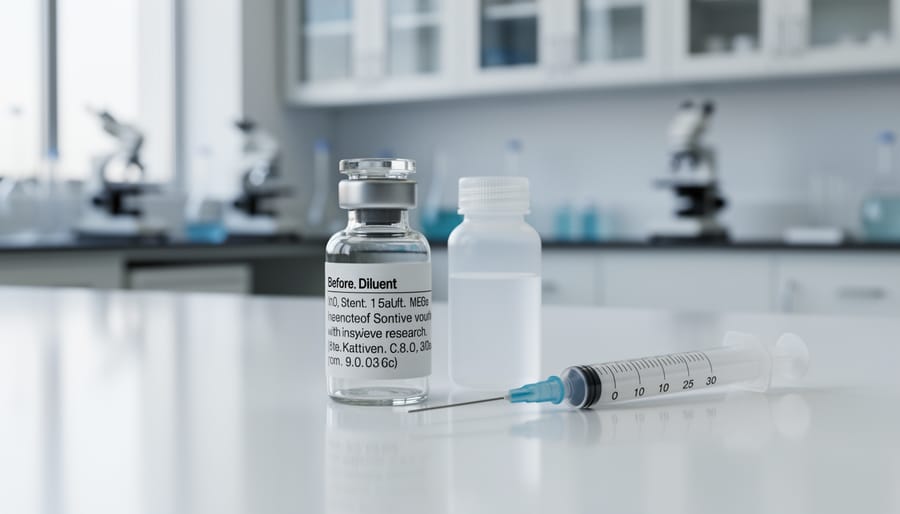
Before a vial is ever opened, a good researcher slows down. Herbalists know this feeling well. You wouldn’t start a tincture on a cluttered counter with unwashed hands, and the same patience pays off here. Preparation is where most contamination problems are prevented, long before reconstitution begins.
Start with a clean, uncluttered bench. Wipe the surface with a suitable disinfectant, clear away anything you won’t need, and give yourself room to work without reaching across open containers. Good clean handling begins with simple habits like these, and good workspace organization keeps every item within reach and in its proper place.
Next, wash your hands thoroughly and put on fresh gloves. Then gather everything you’ll need so you aren’t hunting for supplies mid-process:
- A sealed vial of lyophilized BPC-157, allowed to reach room temperature
- The appropriate sterile diluent for your protocol
- Sterile syringes in sealed packaging
- Alcohol swabs for wiping vial stoppers
- Clean gloves
- Labels and a marker
- A lab notebook for recording each step
- Sterile storage vials for aliquots
Write your plan down before you begin. Note the peptide amount, the diluent volume, the intended concentration, and today’s date. A documented plan makes your work repeatable, which is the whole point of careful research.
Finally, follow your institution’s safety protocols and any supplier guidance. Rules about protective equipment, waste disposal, and approved work areas exist for good reason, and they take priority over any general advice you read, including this article.
Storing Unopened Lyophilized BPC-157
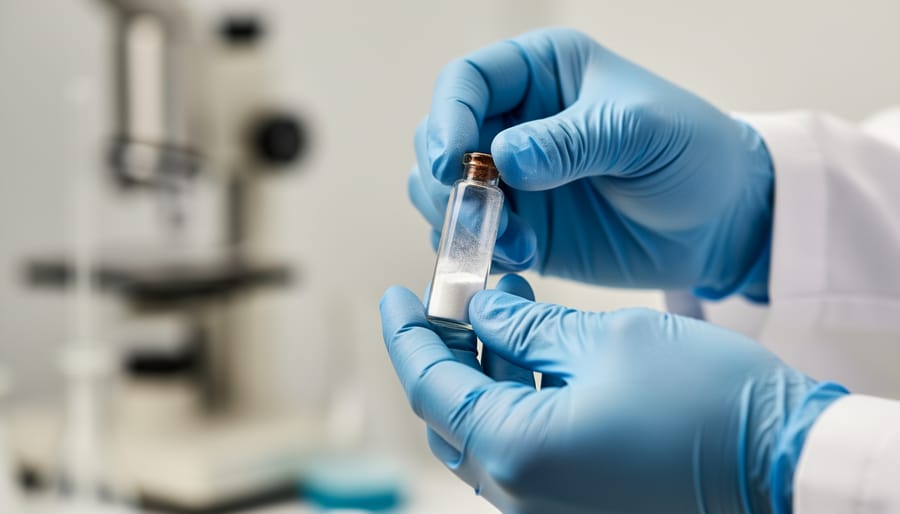
An unopened vial of lyophilized BPC-157 is at its most stable, so the goal is simply to keep it that way. Think of a well-dried herb tucked into a dark, airtight jar: the same logic applies here. Cool, dark, and dry are the three conditions that matter most, and they echo the care a gardener takes with proper preparation and storage of plant material.
For short periods, many labs keep sealed vials in a refrigerator. For longer-term storage, a freezer is commonly used. Those are general practices, not universal rules, and the right temperature depends on your supplier’s data and how long you plan to hold the vial. Whatever you choose, keep the temperature steady. A freezer that cycles through warm spells or a fridge door opened constantly can undermine the very stability you’re trying to protect.
Protect the vial from light by keeping it in its original box or a closed, opaque container. Protect it from moisture by storing it with its cap tightly sealed and, if your lab allows, alongside a desiccant in a sealed secondary container.
One habit is worth building early: never open a cold vial right away. When a chilled vial meets warm room air, condensation forms, and moisture is exactly what a freeze-dried powder doesn’t want. Let the sealed vial sit on the bench until it reaches room temperature, which usually takes a short while, and only then remove the cap or pierce the stopper.
Finally, read the paperwork. The supplier’s certificate of analysis and storage instructions are your best guide, because recommendations vary between manufacturers and batches. If your documentation says one thing and a general guide says another, follow the documentation, and note the storage conditions in your lab records.
Reconstituting BPC-157 Step by Step
Choosing a Diluent
Two diluents dominate lab practice: sterile water for injection and bacteriostatic water. Sterile water has no preservative, so it’s the cleanest choice when a solution will be used once or within a short window. Bacteriostatic water contains 0.9% benzyl alcohol, which slows bacterial growth and is often chosen when a vial will be punctured several times. The trade-off is that the preservative may not suit every assay, so check your experimental design first.
Sterility matters because a peptide solution is a friendly environment for microbes. Contamination can degrade the peptide and spoil your results. Your diluent choice also shapes how long a solution stays usable, so follow your supplier’s guidance and your own validation.
Once you’ve chosen, the general sequence looks like this:
- Let the vial come to room temperature before opening to avoid condensation.
- Sanitize the rubber stopper with an alcohol swab and let it air dry.
- Draw your chosen sterile diluent into a clean syringe.
- Add it slowly, aiming the stream down the inside wall of the vial.
- Swirl gently until the powder dissolves. Never shake.
- Inspect the solution for clarity and discard it if it looks cloudy.
- Label the vial with the date and concentration.
Treat this as a framework, not a fixed rule. Volumes and diluent type depend on your protocol.
Calculating Concentration for Your Protocol
Concentration is just the amount of peptide divided by the volume of diluent you add. Once you know that, planning aliquots becomes simple arithmetic rather than guesswork.
Here’s a worked example. Say your vial contains 5 mg of lyophilized BPC-157, and you add 2 mL of sterile diluent. Divide 5 mg by 2 mL and you get 2.5 mg per mL, which is the same as 2,500 micrograms per mL. If your experimental design calls for 250 micrograms per aliquot, you’d draw 0.1 mL for each one (250 divided by 2,500).
Always confirm the actual peptide content on your supplier’s certificate of analysis, since the labeled amount can differ from net peptide content. Write your calculation in your lab notebook before you mix anything.
This math exists purely for experimental design and consistent aliquoting in a research setting. It is not a dose recommendation for people.
Storing Reconstituted BPC-157 and Preserving Potency
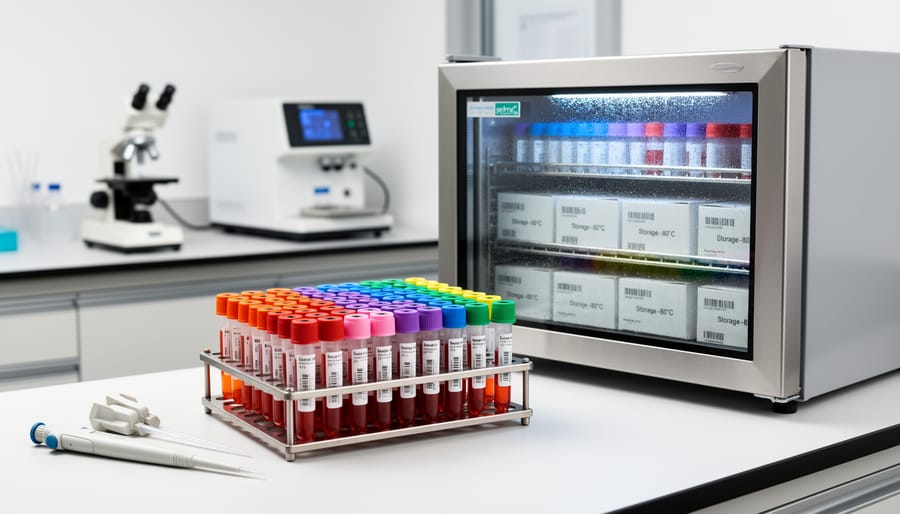
Once the powder is in solution, the clock starts. A reconstituted peptide is far less stable than the freeze-dried form, and how long it stays usable depends on the diluent, the storage conditions, and the specific material. Treat any number you read online as a starting point, not a promise. Supplier data and your own validation should set the timeline.
Refrigeration is the usual choice for a working solution. Keep the vial cold and in the dark, either in its original amber glass or wrapped in foil, and put it at the back of the unit where the temperature stays steadier than it does on the door. Light and warmth are quiet saboteurs, much like leaving a tincture on a sunny windowsill.
The bigger habit to build is dividing the solution into single-use aliquots right after mixing. Every time a stock vial warms, cools, or gets opened, you add stress and a chance for contamination. Small portions mean each one is used once and then discarded, so you never put a half-used vial through repeated freeze-thaw cycles. If your protocol calls for freezing aliquots, freeze them promptly and thaw only what you need.
Label everything at the time you make it. At minimum, record:
– The compound and concentration
– The diluent used
– The date of reconstitution
– Your initials or batch reference
Keep a simple log of how long each solution has been stored and how it was handled. If the liquid turns cloudy, develops particles, or changes color, discard it rather than hoping for the best. Good records protect your results the same way a careful herbalist’s notes protect a batch.
Common Mistakes and Troubleshooting
Even careful researchers slip up with peptides, so think of this as a friendly checklist rather than a scolding. Most problems trace back to a handful of habits: swirling too hard, reaching for non-sterile water, thawing and refreezing the same vial, or skipping the label because “I’ll remember.” The good news is that most of them are preventable, and a few are fixable.
Here’s a quick guide to what you might see at the bench:
| Problem | Likely cause | What to do |
|---|---|---|
| Cloudy solution | Contamination, or peptide that has degraded or aggregated | Discard and reconstitute a fresh vial with sterile diluent |
| Powder won’t dissolve | Too little diluent, cold diluent, or vigorous agitation | Let it sit and swirl gently; if undissolved particles remain, start over |
| Unexpected loss of activity | Repeated freeze-thaw cycles, heat, or light exposure | Use single-use aliquots and review your storage records |
| Unclear labeling | Missing date, concentration, or diluent notes | Treat the vial as unverified and replace it |
Notice the pattern. When in doubt, discarding is usually cheaper than compromising an experiment. A herbalist wouldn’t use a tincture that smelled off or had unexplained cloudiness, and the same instinct serves you here. Cloudiness in particular is a signal to stop, not something to filter or ignore.
If you can’t verify what’s in a vial, when it was mixed, or how it was stored, the data it produces can’t be trusted. Label everything at the moment you mix it, and start fresh whenever the record is incomplete.
Frequently Asked Questions About BPC-157 Lab Handling
How long does lyophilized BPC-157 last?
Stored sealed in cool, dark, dry conditions, freeze-dried peptide is generally far more stable than a solution. Exact shelf life varies by supplier and batch, so rely on the certificate of analysis and the supplier’s storage instructions rather than a universal number.
Can I freeze reconstituted BPC-157?
Some labs freeze single-use aliquots to limit degradation, but repeated freeze-thaw cycles are widely considered damaging to peptides. If you freeze, divide the solution first and thaw each portion only once. Guidance here varies, so validate against your own protocol.
Is bacteriostatic water better than sterile water?
Bacteriostatic water contains a preservative that discourages microbial growth, which may help a multi-use vial stay usable longer. Sterile water has no preservative, so it’s often used when a solution will be consumed quickly. Your experimental design should drive the choice, since some assays are sensitive to preservatives.
Why is my solution cloudy?
A properly reconstituted solution is typically clear. Cloudiness or visible particles can signal contamination, incomplete dissolving, or degradation. When in doubt, discard it and start fresh.
Does refrigeration make reconstituted peptide last indefinitely?
No. Stability in solution is shorter than in powder form, and the window differs by diluent, concentration, and handling. Label every vial with its preparation date and track how long you keep it.
Is there solid evidence on BPC-157’s stability?
Published stability data is limited compared with well-established pharmaceuticals, and BPC-157 remains an investigational research compound. Treat general storage advice as sensible practice, not guaranteed fact.
A final reminder: this article is educational, not medical advice. Always consult your supplier’s documentation, your institutional safety officer, and the regulations that apply to your work before handling any research compound.
Any good herbalist will tell you that quality begins long before the work itself. It lives in how you store, prepare, and handle what’s in front of you. That same respect for materials applies to a delicate research peptide like BPC-157.
To recap the essentials: keep the sealed powder cool, dark, and dry, and let a cold vial reach room temperature before opening it. Use a sterile diluent, swirl gently instead of shaking, and calculate your concentration carefully. Divide the solution into labeled single-use aliquots, refrigerate them, and track how long each has been kept. When in doubt, discard and start fresh.
Remember that this is educational lab guidance, not medical advice, and BPC-157 remains an investigational compound. Always lean on supplier documentation, your institution’s safety officers, and trustworthy sources as you keep learning.
If you’re also drawn to plant-based wellness, Herbal Heritage’s courses are a welcoming place to build that knowledge with the same patience and care.