
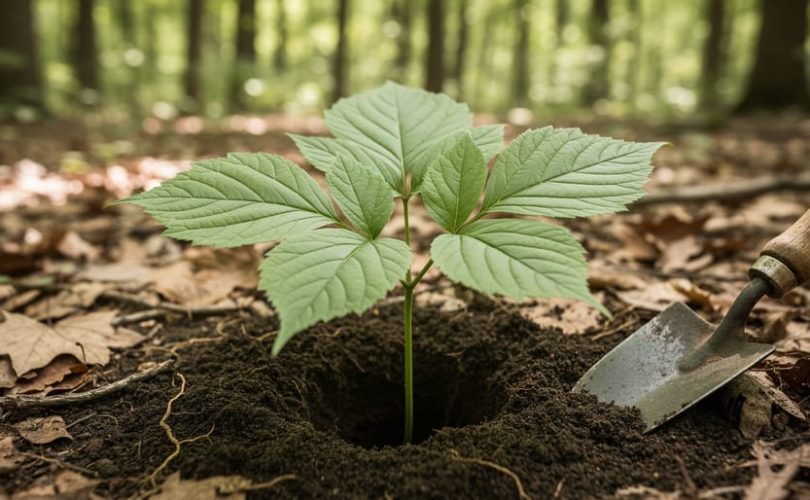
Harvesting wild ginseng requires finding mature plants with three or more prongs in approved habitats during your state’s legal season, carefully digging the entire root without breaking it, and replanting the red berries to ensure future populations. This process demands patience, sharp identification skills, and strict adherence to conservation laws that vary dramatically by state and can carry serious penalties for violations.
The roots you’ll unearth represent far more than valuable herbs. Wild American ginseng grows slowly, taking seven to ten years to reach harvestable maturity, and centuries of overharvesting have driven this woodland treasure onto the threatened species list in most of its native range. What was once a common forest companion has become rare enough that federal law now governs its interstate sale, and some states prohibit harvest entirely while others require permits, limit seasons to a narrow window between September and November, and mandate minimum plant age or prong count.
This scarcity makes wild ginseng roots exceptionally valuable, sometimes fetching hundreds of dollars per pound, but that same value has attracted poachers and careless diggers who threaten the species’ survival. Responsible harvesters balance the tradition of wildcrafting with conservation, treating each plant as both a medicinal ally and a living connection to forest ecosystems that predate modern herbalism by millennia.
Before you set foot in the woods with a digging tool, you must verify your local regulations, learn to distinguish ginseng from poisonous lookalikes, and commit to harvesting practices that protect wild populations. The knowledge passed down through generations of diggers isn’t just about finding roots. It’s about ensuring your grandchildren will have the same opportunity.
Understanding Wild Ginseng Before You Harvest
American ginseng (Panax quinquefolius) is a slow-growing woodland perennial native to the hardwood forests of eastern North America. Unlike its cultivated counterpart, wild ginseng thrives in undisturbed forest ecosystems with deep, rich soil and a dense overhead canopy. The plant requires specific conditions to flourish: north or east-facing slopes, companion plants like bloodroot and black cohosh, and the dappled shade of mature deciduous trees.
What makes wild ginseng particularly precious is its glacial growth rate. A harvestable root takes anywhere from seven to fifteen years to develop the characteristic gnarled form and multiple prongs that signal maturity. Each spring, the plant emerges from dormancy, slowly adding another whorl of leaves. By late summer, mature plants produce clusters of bright red berries containing seeds that can take eighteen months just to germinate. This protracted life cycle means every root you encounter in the forest represents decades of undisturbed growth.
The difference between wild and cultivated ginseng extends beyond growth rate. Wild roots develop a twisted, man-shaped form that traditional herbalists have long associated with greater medicinal potency. Cultivated ginseng, grown in artificial shade structures and harvested after three to five years, produces smoother, more uniform roots that lack the wild plant’s complex growing conditions. While both contain beneficial ginsenosides, many practitioners value wild ginseng for its adaptogenic properties developed through environmental challenges.
This slow maturity makes American ginseng vulnerable to overharvesting. The plant is now listed as threatened or endangered in multiple states, and all wild ginseng harvest is regulated under CITES (Convention on International Trade in Endangered Species). Traditional herbalists recognized ginseng as a teacher plant, one that demands patience, respect, and reciprocity. Understanding this context transforms harvesting from simple foraging into an act of stewardship. When you remove a fifteen-year-old root, you’re withdrawing from a biological savings account that replenishes at a crawl.
Legal Requirements and Harvest Regulations
Harvesting wild American ginseng is heavily regulated at both federal and state levels, and understanding these laws isn’t optional, it’s the foundation of legal, ethical practice. The U.S. Fish and Wildlife Service oversees ginseng harvest because the plant is listed under the Convention on International Trade in Endangered Species (CITES), which means anyone selling roots across state lines or internationally must comply with strict documentation requirements.
Most states with wild ginseng populations set harvest seasons that run from August through November, timed to coincide with when the plant has produced red berries and the seeds are mature. This timing allows harvesters to replant seeds immediately, supporting population regeneration. However, exact dates vary: some states open their season as early as August 15, while others wait until September 1. Harvest seasons typically close by December 1, though a few states end earlier in November.
Age and maturity requirements are equally critical. Nearly all states require that harvested plants have at least three prongs (leaf clusters), though some mandate four or five prongs to ensure the plant has reached adequate maturity, usually 5 to 10 years old. You must also harvest only plants with red berries present, as this confirms reproductive maturity and provides seeds for replanting.
Permit and licensing requirements depend on your intent. If you’re harvesting for personal use, many states require no permit, though some do. If you plan to sell ginseng, even locally, you’ll typically need a dealer or digger’s license, which varies in cost and application process by state. Exporting ginseng requires a state-issued certificate verifying that the harvest was legal, sustainable, and compliant with CITES regulations. Dealers purchasing roots will demand this documentation.
Before you dig a single plant, contact your state’s department of natural resources, agriculture, or conservation agency to obtain current 2026 regulations specific to your location. Laws change, and what was permissible last year may not be this year. Responsible sustainable wildcrafting starts with knowing, and following, the rules that protect both you and the plant populations you depend on.
Tools and Materials You’ll Need
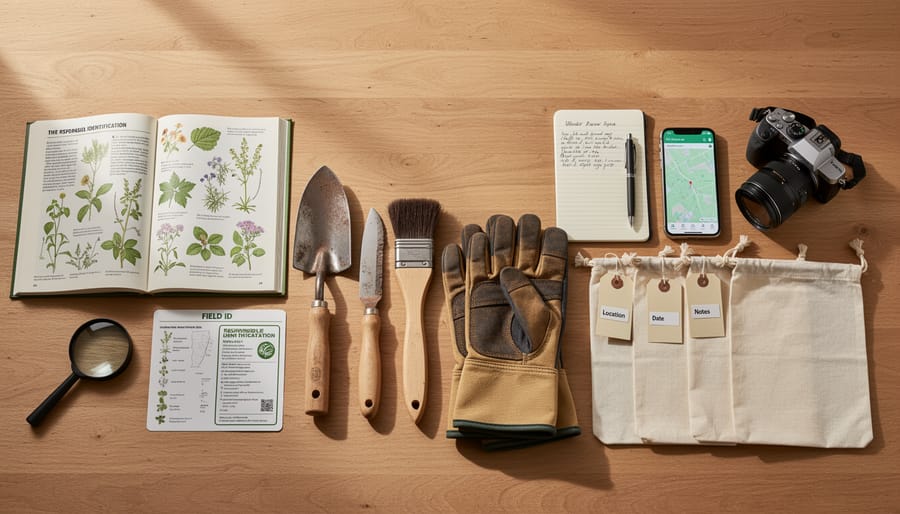
Before you set foot in the forest, assembling the right gear makes the difference between a successful, sustainable harvest and a frustrating or even dangerous experience. Wild ginseng hunting takes you into remote woodland areas where preparation directly affects both your safety and your ability to harvest responsibly.
Your core harvesting kit should include:
- Narrow trowel or hori-hori knife for careful root excavation without damage
- Breathable collection bag or woven basket to prevent root sweating and deterioration
- Current field guide specific to American ginseng and regional look-alikes
- GPS device or smartphone with offline maps for recording exact harvest locations
- Camera for documenting plant maturity, berry presence, and habitat conditions
- Waterproof notebook and pencil for recording dates, locations, and observations
- First aid kit with tick removal tools, bandages, and any personal medications
- Compass as backup navigation if electronic devices fail
- Water, high-energy snacks, and appropriate clothing for extended woodland travel
The digging tool matters more than you might think. A narrow trowel (no wider than two inches) or Japanese hori-hori knife lets you excavate around the root without severing lateral branches. Avoid shovels or wider implements that risk damaging the valuable root structure you’ve come to harvest.
For personal safety in backcountry areas, add insect repellent, a whistle for signaling if you become disoriented, and a charged phone (even without service, it can assist with GPS and photos). Wear long pants and boots to protect against ticks, snakes, and thorny underbrush. If you’re harvesting on legitimate private land with permission, carry written landowner consent to avoid legal complications. A small backpack keeps your hands free for navigating rough terrain and identifying plants as you search.
Identifying Wild Ginseng in the Forest
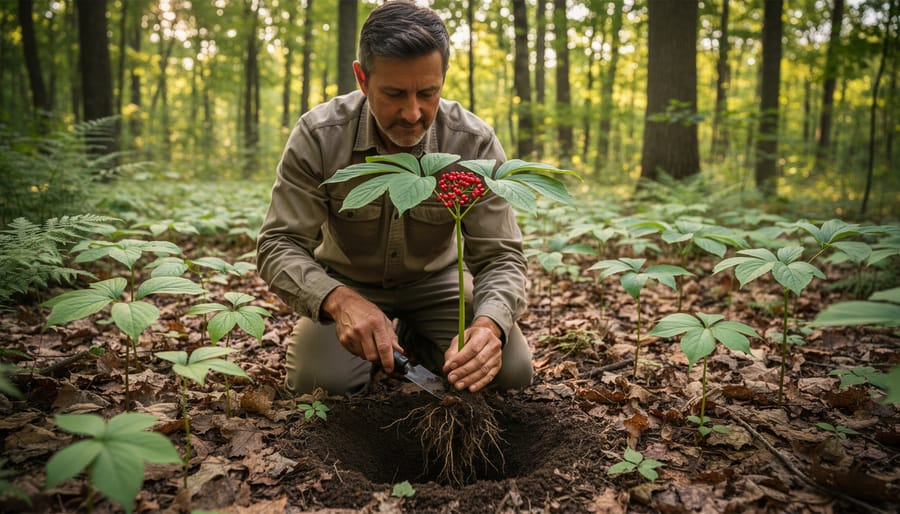
Spotting wild ginseng in a dense forest requires a trained eye and patience. The plant’s distinctive features become second nature once you know what to look for, but beginners often walk right past it without recognition.
American ginseng grows a single stem, typically 8 to 15 inches tall, crowned by a whorl of palmately compound leaves. Each leaf divides into three to five leaflets radiating from a central point, resembling an open hand. Younger plants produce just one “prong” (a group of three leaflets), while mature, harvestable ginseng displays three or more prongs. The five-prong configuration, with each prong containing five serrated leaflets, signals a plant at least seven years old, the ideal harvest candidate.
From late June through July, you’ll notice a cluster of small greenish-white flowers emerging from the center of the leaf whorl. By late August through October, these transform into the plant’s most recognizable feature: a tight cluster of bright red berries, usually six to twenty per plant. If you see red berries, you’ve found a mature specimen.
Ginseng thrives on north or east-facing slopes in mature hardwood forests, particularly where sugar maple, basswood, tulip poplar, and black cohosh grow. The soil should be rich, moist, and well-drained, with dense shade from the canopy above. Look in areas with deep leaf litter and minimal direct sunlight.
Several plants can fool novice foragers. Virginia creeper has five leaflets but grows as a climbing vine, not an upright herb. Wild sarsaparilla produces similar compound leaves but has a woody stem and different berry arrangement. Jack-in-the-pulpit shares the same habitat but features broader, simpler leaves and produces red berries in an elongated cluster rather than a compact bunch.
Take time to study multiple specimens before harvesting. Misidentification doesn’t just mean a wasted trip, it can mean accidentally destroying other valuable native plants.
Safety Considerations and Precautions
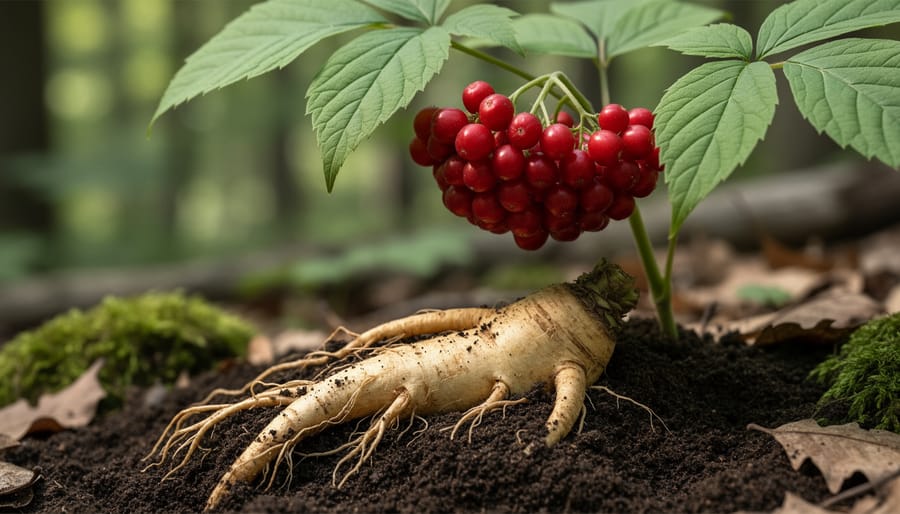
Wild ginseng habitat presents real physical risks that demand preparation and caution. The steep, north-facing hardwood slopes where ginseng thrives can be slippery, especially after rain or in early morning dew. Wear sturdy boots with good traction and watch your footing on leaf-covered inclines where roots, rocks, and hidden holes can cause falls. A walking stick helps with balance and can probe uncertain ground ahead of you.
Wildlife encounters are common in remote forest areas during harvest season. Venomous snakes, particularly copperheads and timber rattlers, often inhabit the same rocky, shaded slopes that ginseng prefers. Watch where you place your hands when moving leaf litter or logs. Ticks carrying Lyme disease are prevalent in these environments, so treat clothing with permethrin, perform thorough tick checks after each outing, and know the signs of tick-borne illness. In bear country, make noise as you move through the woods and carry bear spray. Black bears are generally more interested in avoiding you than confronting you, but surprising one at close range creates dangerous situations.
Plant identification errors carry serious consequences beyond legal penalties. Several woodland plants resemble ginseng to the untrained eye, including Virginia creeper (which has five leaflets but different leaf arrangement) and various toxic species. Never harvest a plant unless you’re absolutely certain of its identity. If you’re new to ginseng identification, hunt with an experienced forager first or bring multiple field guides for cross-reference.
Know exactly where you are and who owns the land. Many promising ginseng patches sit on private property or within state parks and nature preserves where harvest is prohibited regardless of season. Download property boundary maps to your phone before heading out, and always secure written permission from landowners. Trespassing charges and civil liability for timber trespass can cost thousands of dollars.
The buddy system isn’t just good practice, it’s potentially lifesaving. Cell service is often nonexistent in prime ginseng habitat. If you’re injured or lost, having a partner who knows your planned route and can go for help makes the difference between an inconvenience and a tragedy. Share your harvest location and expected return time with someone not on the trip.
Finally, avoid damaging plants and their surrounding ecosystem by never harvesting during closed seasons (which vary by state but generally run outside August through November), on protected public lands, or from populations with fewer than twenty mature plants. These restrictions exist to protect the species and ensure your safety within the law.
Step-by-Step Sustainable Harvesting Process
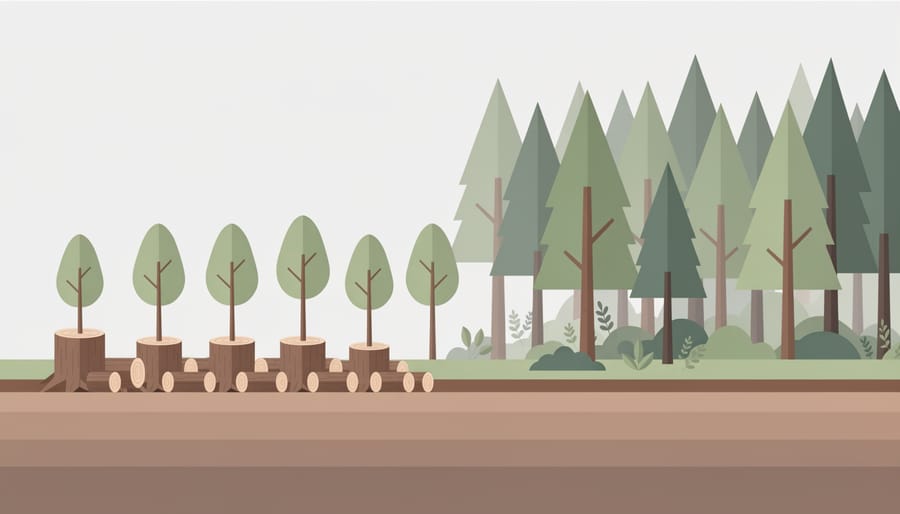
Once you’ve confirmed ginseng identification and verified legal harvest conditions, executing the actual collection requires deliberate care at each stage. These ethical foraging steps balance your harvest goal with the plant’s regeneration capacity and legal compliance.
- Confirm plant maturity and readiness. Count the prongs (leaf clusters) on the stem. A harvestable ginseng plant displays at least three prongs, though four or five indicates greater maturity and stronger medicinal properties. Look for red berries, which signal the plant has reached reproductive age and produced viable seeds. Without berries, you cannot replant and perpetuate the population. If the plant lacks sufficient prongs or berries, mark the location mentally and return next season.
- Verify legal compliance one final time. Before touching the plant, confirm that today’s date falls within your state’s open harvest season and that you’re standing on land where harvest is permitted. Double-check your harvest permit is current and accessible. This pause prevents costly violations and ensures your harvest contributes to legal wild herb markets rather than endangering conservation efforts.
- Clear the surrounding leaf litter gently. Use your hands to move aside fallen leaves, small twigs, and organic debris in a circle about twelve inches around the stem. Work slowly to avoid damaging nearby roots or disturbing the seed berries. This clearing lets you see the soil structure and root direction, preventing accidental breakage when you dig.
- Harvest and plant the seeds immediately. Carefully remove the berry cluster from the stem. Separate the seeds from the pulp by gently rolling the berries between your fingers. Plant these seeds right where you’re harvesting, spacing them in a natural scatter pattern within six to twelve inches of the parent plant’s location. Press each seed about half an inch into the soil. This step is not optional. It replaces the plant you’re removing and maintains wild populations for future harvesters.
- Dig carefully to preserve the entire root system. Insert your trowel or hori-hori knife about six inches from the stem base, angling downward and inward. Ginseng roots can extend surprisingly deep and branch unpredictably. Work around the plant in a circle, loosening soil rather than prying. Lift the root mass gently, keeping the characteristic forked shape intact. Broken roots lose value and suggest careless harvest.
- Restore the harvest site completely. Fill the cavity with the excavated soil, tamping it down lightly to eliminate air pockets. Replace the leaf litter exactly as you found it, matching the surrounding forest floor’s appearance. This restoration protects the seeds you just planted, maintains soil moisture, and leaves no visual trace that attracts other harvesters to this regeneration spot.
- Document your harvest immediately. Record the GPS coordinates or landmark description, date, number of roots collected, and estimated age based on prong count. Many states require harvest logs for permit compliance. Your documentation also helps you avoid over-harvesting the same area in future seasons and provides valuable data if you pursue dealer certification.
Each step reinforces the next harvest. The seeds you plant today become the roots available in a decade, creating a sustainable cycle that honors both traditional wildcrafting practices and modern conservation needs.
Post-Harvest Handling and Processing
Once you’ve carefully extracted your wild ginseng root, how you handle it in the next 24-48 hours directly affects both its medicinal potency and market value. Proper post-harvest processing preserves the compounds that make ginseng valuable while preventing mold, rot, and quality degradation.
Start by gently removing loose soil from the root with your hands or a soft brush, never wash fresh roots immediately, as excess moisture invites decay. Some experienced harvesters lightly rinse roots in cool water only if heavily caked with clay, then pat them completely dry with a clean cloth. The goal is minimal handling that preserves the fine root hairs and prevents bruising the main root body.
Drying is the most critical step. Spread roots in a single layer on screens, cardboard, or breathable fabric in a shaded area with good air circulation. Room temperature (60-70°F) works best; never use ovens, dehydrators, or direct sunlight, which destroy the ginsenosides responsible for ginseng’s adaptogenic effects. Properly dried roots take two to six weeks depending on size and humidity. They’re ready when they snap cleanly rather than bend, with no soft spots or moisture in the core when broken.
Follow these guidelines throughout the process:
- Handle roots gently to avoid breaking fine root hairs, which are quality indicators for buyers
- Turn roots every few days during drying to ensure even air exposure on all sides
- Discard any roots showing mold, soft rot, or unpleasant odor, they cannot be salvaged
- Store fully dried roots in paper bags, cardboard boxes, or cloth sacks in a cool, dry location
- Avoid plastic containers or airtight storage, which trap residual moisture and cause spoilage
For personal medicinal use, you can begin using roots once fully dried. Slice or grind small amounts as needed, since whole roots store longer. If selling to dealers, keep roots whole and undamaged. Commercial buyers grade ginseng by root shape, age rings visible in cross-section, and the presence of intact root hairs. Properly processed wild roots command premium prices, often $500-800 per pound in 2026, but only if handling preserves their wild character and quality markers.
Verifying a Successful and Legal Harvest
After you’ve dug and cleaned your ginseng roots, take a moment to verify you’ve met both legal and quality standards. This final checkpoint protects you from regulatory issues and ensures the roots retain their medicinal value.
Start by confirming you planted all viable seeds immediately after harvest. They should be buried about half an inch deep in the loose soil where you found the parent plant. If seeds scattered during digging, search the area and plant them. This step is legally required in most states and crucial for population sustainability.
Review your harvest documentation. Record the location (GPS coordinates or detailed description), date, number of plants harvested, and maturity of each plant. Many states require this information if you’re selling to a licensed dealer. Take clear photos of the harvest site and the root crowns, which show age through growth rings.
Check that your roots meet sale standards if you plan to sell them. Wild ginseng should have horizontal growth rings on the neck (rhizome), which distinguish it from cultivated varieties. The roots should be whole, not broken, with minimal rootlets removed. Dealers pay significantly more for clean, intact roots with the characteristic wrinkled appearance.
If you’re selling, contact a licensed ginseng dealer before the state’s export certification deadline, typically in late fall. You’ll need to present your roots for inspection and obtain proper documentation. For personal medicinal use, verify the roots are completely dry before storage. They should snap rather than bend.
Common Questions About Wild Ginseng Harvesting
How much is wild ginseng worth?
Wild ginseng prices fluctuate based on root size, age, and market demand, but mature roots typically sell for $300-$800 per pound to licensed dealers in 2026. Exceptional specimens with clear age rings and traditional characteristics can command higher prices, though most harvesters find the real value lies in personal use rather than income.
Can I harvest on public lands?
Harvest regulations on public lands vary by state and land management agency. Many national forests permit harvest with proper permits during legal seasons, while national parks prohibit it entirely. Always contact the specific land management office before harvesting to understand current restrictions.
What’s the difference between wild and cultivated ginseng medicinally?
Traditional herbalists consider wild ginseng more potent due to its slower growth and adaptation to natural stresses, though scientific studies show both contain similar active compounds. The main differences lie in concentration levels and the complexity of secondary metabolites that develop over decades in wild environments.
How long does it take ginseng to regrow after harvest?
American ginseng requires 7-10 years minimum to reach harvestable maturity from seed, which is why replanting seeds immediately is critical for population sustainability. Even with proper seed planting, that specific plant is gone forever once the root is harvested.
Getting a dealer license requires meeting your state’s specific requirements, which typically include bonding, proof of business location, and fees ranging from $50-$500. Most states require dealers to maintain detailed harvest records and follow export documentation procedures, making this necessary only if you plan to buy ginseng from other harvesters rather than just selling your own harvest.
The best harvest time for maximum potency falls in September and October after berries ripen but before frost, when roots have stored energy for winter dormancy. This timing aligns with both legal seasons and traditional wisdom, though ancient herbal stewardship practices emphasized knowing individual plant cycles rather than following calendar dates alone.
Wild ginseng cannot be cultivated in the garden sense. Woods-grown ginseng exists as a middle category, where seeds are planted in forest settings but with minimal human intervention, taking 5-8 years to mature. If you want to grow healing herbs under controlled conditions, cultivated ginseng in raised beds matures faster but lacks the wild characteristics that define true wild ginseng in both appearance and traditional medicinal application.
Harvesting wild ginseng is more than a skill, it’s a responsibility to the plant, the forest ecosystem, and the generations of herbalists who will come after you. Every root you dig represents years of slow growth in the wild, and every seed you plant is an investment in the future of this threatened species. The knowledge you’ve gained here comes with an obligation to practice it ethically and to share it accurately with others.
Sustainable harvesting isn’t just about following regulations. It’s about understanding ginseng’s place in the broader story of medicinal plants and traditional herbalism. When you harvest mindfully, taking only mature plants, planting every seed, documenting your impact, you become a steward rather than simply a collector. This shift in perspective transforms wildcrafting from extraction to participation in a living tradition.
Consider deepening your herbalism education through formal study that bridges ancient wisdom with modern conservation science. The most effective herbalists combine traditional plant knowledge with ecological awareness and ethical practice. They understand that protecting wild medicinal plants ensures their availability for healing work long into the future.
You now have the tools to harvest wild ginseng legally and sustainably. Use them with care, continue learning, and remember that every mindful harvest strengthens both the plant populations and the tradition itself.


